
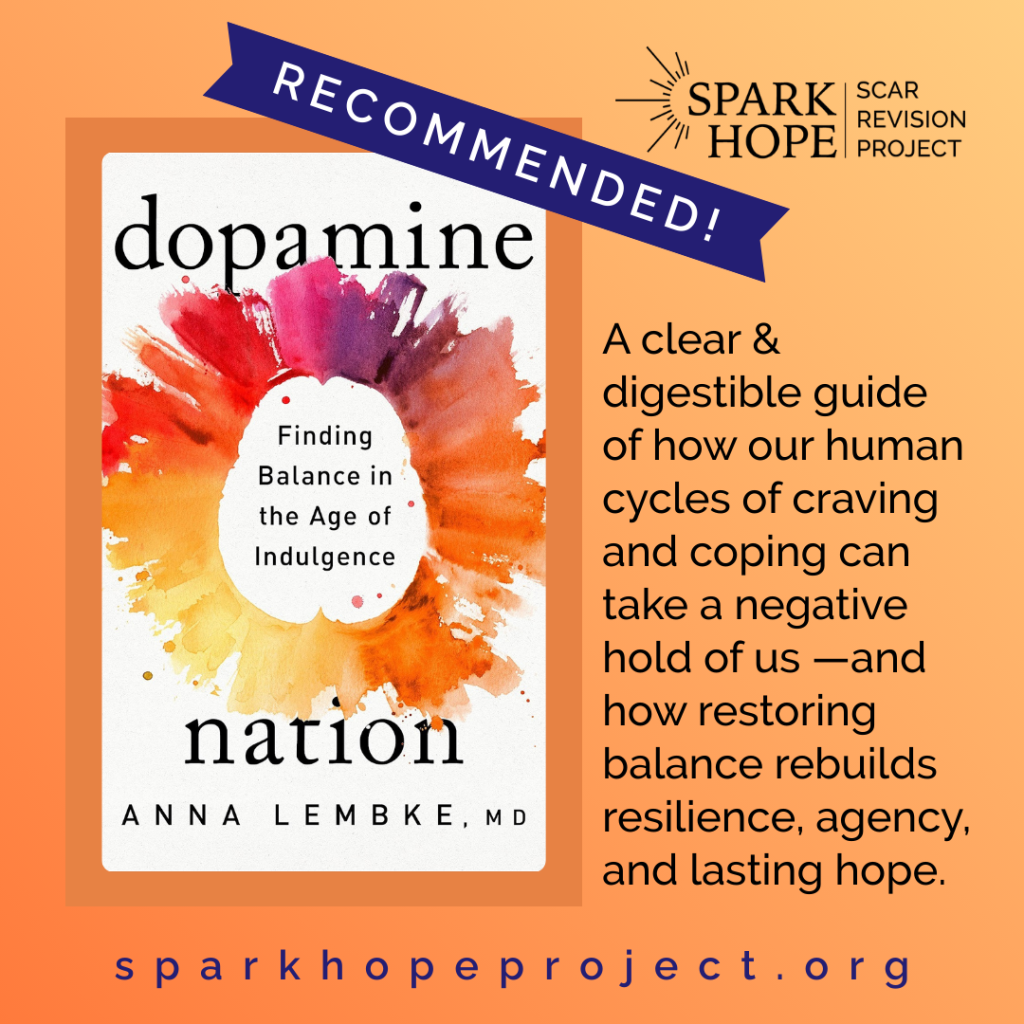
By Anna Lembke, MD
If Anxious Generation by Jonathan Haidt was my favorite non-fiction book of 2025, Dopamine Nation by psychiatrist Anna Lembke is my new favorite for 2026! In this extremely compelling and accessible read, Lembke explores how the modern world’s overabundance of pleasure-inducing stimuli (like smartphones, food, and drugs) is reshaping our brains and behaviors. Lembke’s use of patient stories and neuroscience explains the balance between pleasure and pain and offers strategies like fasting from tech and finding healthier sources of fulfillment to regain control. It’s a thoughtful resource for anyone interested in mental wellness, resilience, and building healthier relationships with the things that promise relief or escape.
Some of the key takeaways to help us recover our brains:
- Understanding the pleasure–pain balance of our brains is built on a balancing scale: repeated pleasure (scrolling, sugar, substances, gaming, shopping) is followed by a compensatory “pain” response (irritability, anxiety, low mood). Unfortunately, over time, chasing pleasure actually increases distress and increases the need for more and more pleasure seeking. It’s a destruction of the healthy cycle, and it leads to increasing and, sometimes, overwhelming dissatisfaction.
- Trying a dopamine fast from a compulsive behavior for about 30 days can help reset reward pathways and restore sensitivity to everyday joys.
- Expecting withdrawal discomfort because, logically, when you stop a habit, you may feel worse before you feel better. This discomfort is temporary and signals your brain recalibrating.
- Limiting constant stimulation like multitasking and nonstop digital input keeps the brain in reward-seeking mode. Reducing notifications, screen time, and background noise helps restore focus and calm.
- Practicing self-binding – as in creating barriers between you and tempting behaviors. To set yourself up for success:
-Remove apps
-Set screen limits
-Avoid triggers
-Keep substances out of reach - Using healthy pain to restore balance by engaging in activities that require effort or discomfort can improve well-being:
-Exercise
-Cold exposure
-Difficult conversations
-Challenging learning experiences - Seeking honesty and accountability and understanding that shame fuels compulsive behavior. Telling the truth about habits – to yourself and trusted others – reduces secrecy and builds true resilience.
- Cultivating gratitude and contentment trains our attention toward what is enough and helps counter the endless pursuit of “more.”
- Connection beats isolation, and meaningful relationships and service to others regulate the nervous system and reduce compulsive reward-seeking.
Net net: Sustainable well-being does NOT come from maximizing pleasure, but from restoring balance, tolerating discomfort, and building a life grounded in meaning and connection. It takes time and it takes effort. But it is worth the time and effort for the long game of life.